
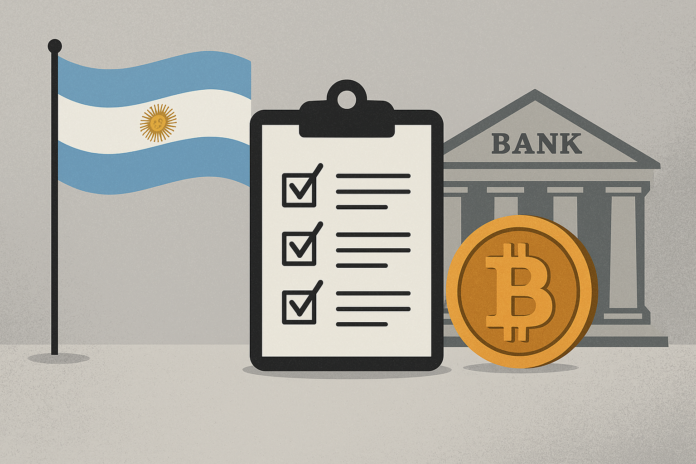

- A brand new framework would permit buying and selling, custody, and permitted cash.
- Banks should observe strict KYC, AML, and CNV laws.
- High inflation has pushed folks towards Bitcoin and stablecoins.
Argentina is making ready for a significant shift in how its monetary system treats digital property, with regulators engaged on a plan that might permit banks to provide Bitcoin and different crypto services for the primary time in three years.
The move marks a notable shift for a rustic the place crypto has develop into a day-to-day instrument for folks making an attempt to handle inflation, and it indicators a wider effort to convey casual crypto exercise into regulated channels.
The change stays below overview, however inner planning exhibits that Argentina desires its banking system to play a proper function in crypto entry, custody, and compliance.
Banks and crypto rules evolve
Argentina’s central financial institution, the Banco Central de la República Argentina, has restricted banks from dealing with crypto since May 2022.
The regulation was designed to comprise monetary dangers and stop money-laundering exercise throughout a interval of financial instability.
The coverage now sits on the centre of a broader reassessment of how digital property match right into a monetary system that’s combating persistent inflation and rising demand for secure options.
Since December 2023, the arrival of President Javier Milei has reshaped the dialog.
His administration has promoted monetary freedom, arguing that individuals ought to have the opportunity to select totally different types of cash, together with Bitcoin.
This shift has influenced how regulators strategy the present ban and has accelerated work on a brand new framework.
New framework plans develop
Reports point out that the central financial institution is growing a system that may allow banks to combine crypto into their services.
The plan consists of buying and selling entry, custody choices, and a listing of permitted cash, restricted to property such as BTC, ETH, USDC, USDT, and XRP.
Banks would wish to adjust to strict rules below the CNV, observe enhanced KYC and AML procedures, and function crypto actions by means of legally separate models with extra capital, safety, and liquidity necessities.
The strategy represents a transition from prohibition to managed participation.
Argentina can be one of many first inflation-hit economies to regulate crypto inside mainstream banking slightly than leaving it to casual platforms.
The change additionally goals to cut back regulatory gaps and enhance transparency throughout transactions that residents already depend on to shield their financial savings.
Inflation pressures gasoline demand
Crypto adoption has grown quickly in Argentina over the previous three years as households look for methods to protect worth.
With inflation reaching 1,427% in 2023 and nonetheless rising greater than 2% every month, folks have turned to Bitcoin and dollar-linked stablecoins to handle each day bills, retailer cash, and keep away from publicity to the peso’s depreciation.
Regulators now need this exercise to function below formal safeguards.
Allowing banks to help crypto services would provide a safer surroundings, restrict the usage of unregulated exchanges, and assist authorities strengthen monetary monitoring.
It would additionally create a extra structured relationship between digital property and conventional banks throughout a interval of financial stress.
Timeline factors to 2026
Although approval isn’t last, experts suggest that the up to date rules might be prepared round April 2026. Work on the technical construction is already underway.
If the proposal moves ahead, Argentina may develop into a key instance of how a rustic going through excessive inflation integrates crypto into standard monetary channels.