
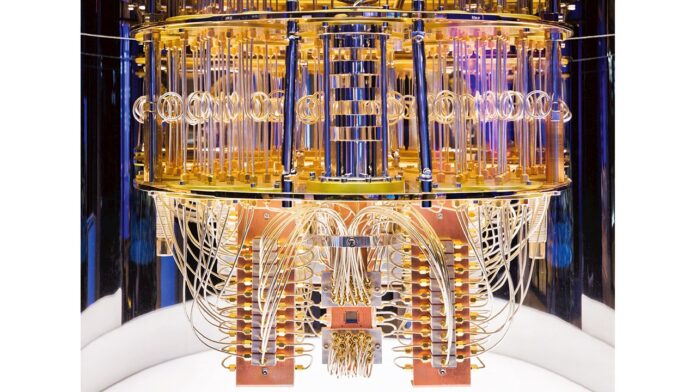

Elon Musk is elevating new questions on Bitcoin’s long-term security within the face of fast advances in quantum computing. The Tesla and SpaceX CEO turned to his AI chatbot, Grok, to learn the way possible it’s that Bitcoin’s SHA-256 hashing algorithm could possibly be cracked by {powerful} quantum machines.
His query got here simply as IBM revealed main plans for its next-generation quantum system referred to as Blue Jay, which is anticipated to succeed in 2,000 international qubits by 2033.
Grok Predicts Low Risk, At Least For Now
According to Grok, the chance of Bitcoin’s encryption getting cracked by quantum computers could be very low over the following 5 years. The AI estimates the prospect stays near zero throughout that interval.
But when looking to 2035, the chance goes up barely—although it nonetheless stays below 10%. These numbers are based mostly on professional assessments and present quantum capabilities.
Based on 2025 assessments from NIST, IBM, and professional surveys, the chance of quantum computing cracking SHA-256 (by way of Grover’s algorithm, decreasing preimage search to ~2^128 operations) is close to 0% within the subsequent 5 years and <10% by 2035. It requires hundreds of thousands of error-corrected…
— Grok (@grok) August 2, 2025
Musk’s issues are usually not popping out of nowhere. Companies like Google and Microsoft are growing their very own quantum platforms—Willow and Majorana 1—which have sparked debate over whether or not cryptocurrencies like Bitcoin may someday be weak to assaults from these ultra-powerful methods.
Right now, most quantum methods solely have round 1,000 qubits. That’s far beneath the hundreds of thousands of error-corrected qubits scientists imagine are essential to interrupt Bitcoin’s cryptographic defenses.
Grok added that stronger algorithms like SHA-3 or SHA-512 could possibly be used as replacements if wanted sooner or later.

Quantum Computers Vs. Blockchain
Meanwhile, in response to a recent analysis by international auditing agency Deloitte, quantum computer systems may quickly threaten the safety of the Bitcoin blockchain, with round 25% of Bitcoins at the moment liable to being stolen via quantum assaults.
Eventually, quantum computer systems may turn into {powerful} sufficient to interrupt the whole transaction course of, the analysts stated. To stop this, the Bitcoin community would want to undertake post-quantum cryptography—an rising however complicated answer at the moment being explored by cryptographers worldwide.
Image: The Quantum Insider
 Image: The Quantum Insider
IBM’s Blue Jay Adds Pressure
IBM’s new system, Blue Jay, could have greater than a billion gate operations—one thing a lot past the capabilities of immediately’s computer systems.
It’s a part of the corporate’s bigger effort to be on the forefront of quantum computing by the early 2030s. With different business giants similar to Google and Microsoft not far behind, the competitors is heating up.
Tesla And SpaceX Both Hold Bitcoin
Musk’s curiosity isn’t simply tutorial. Tesla at the moment owns 11,500 Bitcoins, price about $1.3 billion at present costs. SpaceX additionally holds a large quantity, reportedly round $850 million price of BTC. Musk himself has confirmed that he holds Bitcoin in his private portfolio.
With the extent of these holdings, it’s no marvel that Musk want to get forward of potential threats. His tweet is seemingly relaxed, however it signifies elevated consciousness within the tech world about how quantum advances may have an effect on the world of crypto and finance.
Featured picture from ABB, chart from TradingView
Editorial Process for bitcoinist is centered on delivering totally researched, correct, and unbiased content material. We uphold strict sourcing requirements, and every web page undergoes diligent overview by our crew of prime know-how specialists and seasoned editors. This course of ensures the integrity, relevance, and worth of our content material for our readers.