

An evaluation by Coinglass evaluating perpetual decentralized trade (perp DEX) knowledge has sparked fierce debate and, within the course of, highlighted rifts inside the crypto derivatives sector.
The examine uncovered marked discrepancies in buying and selling volumes, open curiosity, and liquidations throughout Hyperliquid, Aster, and Lighter. Users are left asking what qualifies as real buying and selling exercise on these platforms.
Coinglass Data Sparks Debate Over Authentic Trading on Perpetual DEXs
Coinglass is dealing with backlash after publishing a comparability of perp DEXs, questioning whether or not reported buying and selling volumes throughout elements of the sector replicate real market exercise.
Sponsored
Sponsored
A 24-hour snapshot evaluating Hyperliquid, Aster, and Lighter shows that:
- Hyperliquid recorded roughly $3.76 billion in buying and selling quantity, $4.05 billion in open curiosity, and $122.96 million in liquidations.
- Aster posted $2.76 billion in quantity, $927 million in open curiosity, and $7.2 million in liquidations
- Lighter reported $1.81 billion in quantity, $731 million in open curiosity, and $3.34 million in liquidations.
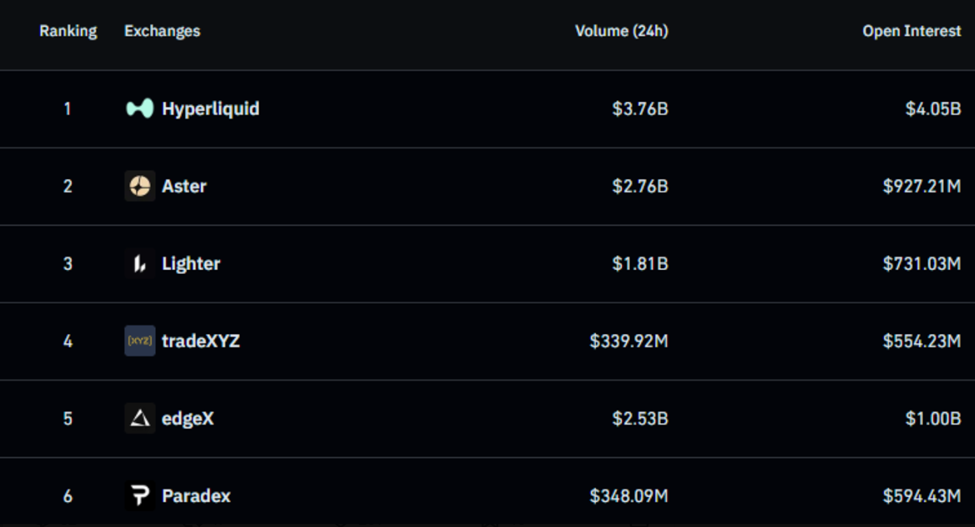
According to Coinglass, such discrepancies can matter. In perpetual futures markets, excessive buying and selling quantity pushed by leveraged positions sometimes correlates with open-interest dynamics and liquidation exercise throughout value strikes.
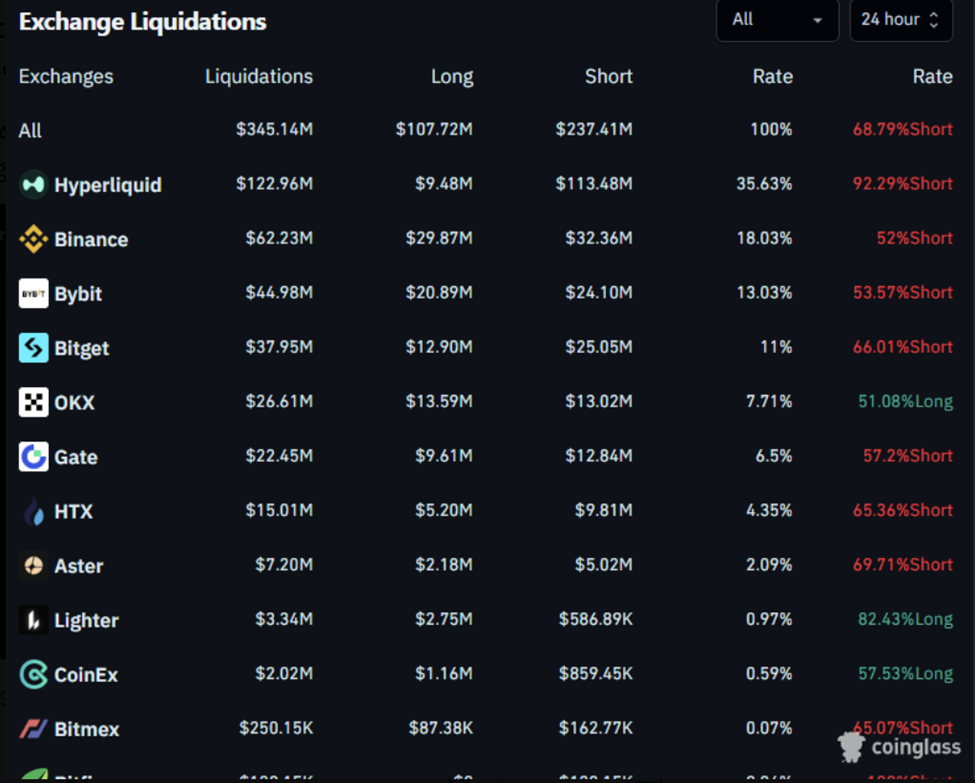
The agency instructed that, quite than natural hedging demand, the mix of excessive reported quantity and comparatively low liquidations might point out:
- Incentive-driven buying and selling
- Market-maker looping, or
- Points farming.
Based on this, Coinglass concludes that Hyperliquid confirmed stronger inside consistency throughout key metrics.
Sponsored
Sponsored
Meanwhile, the quantity high quality of some opponents warrants additional validation utilizing indicators comparable to funding charges, charges, order-book depth, and energetic dealer counts.
“Conclusion…Hyperliquid shows much stronger consistency between volume, OI, and liquidations — a better signal of real activity. Meanwhile, Aster/Lighter’s volume quality needs further validation (vs fees, funding, orderbook depth, and active traders),” the analytics platform indicated.
Critics Push Back, however Coinglass Defends Its Position
However, critics argue that conclusions drawn from a single-day snapshot could possibly be deceptive. Specifically, they counsel different explanations for the information, together with whale positioning, algorithmic variations between platforms, and variations in market construction that would affect liquidation patterns with out implying inflated quantity.
Others questioned whether or not liquidation totals alone are a dependable indicator of market well being, noting that greater liquidations may also replicate aggressive leverage or risky buying and selling circumstances.
Meanwhile, Coinglass rejects accusations that its evaluation amounted to hypothesis or fear, uncertainty, and doubt (FUD), emphasizing that its conclusions have been based mostly on publicly out there knowledge.
Sponsored
Sponsored
“Coinglass simply highlighted a few discrepancies based on publicly available data. We didn’t expect that a neutral, data-driven observation would trigger such hostile reactions,” the agency wrote, including that open dialogue and tolerance for criticism are important for the trade to enhance.
In one other response, Coinglass harassed that disagreements ought to be addressed with stronger proof quite than accusations.
The agency additionally argued that greater leverage ceilings on some platforms might make them structurally extra vulnerable to compelled liquidations. This outlook shifts the controversy away from uncooked numbers towards trade design and threat administration.
A Pattern of Backlash within the Perp DEX Sector: What Counts as “Real” Activity?
The controversy comes amid a broader wave of disputes surrounding Hyperliquid and the perpetual DEX market.
Earlier, Kyle Samani, co-founder of Multicoin Capital, publicly criticized Hyperliquid, elevating issues about transparency, governance, and its closed-source parts.
Sponsored
Sponsored
His remarks triggered robust reactions from merchants and supporters of the platform, many of whom dismissed the criticism and questioned his motives.
BitMEX co-founder Arthur Hayes additional escalated the feud by proposing a $100,000 charity wager, difficult Samani to pick any main altcoin with a market cap above $1 billion to compete in opposition to Hyperliquid’s HYPE token in efficiency over a number of months.
The dispute highlights a deeper situation dealing with crypto derivatives markets: the shortage of standardized metrics for evaluating exercise throughout DEXes.
Trading quantity has lengthy served as a headline indicator of success. However, the rise of incentive applications, airdrop campaigns, and liquidity-mining methods has sophisticated the interpretation of these figures.
As new perp DEX platforms launch and competitors intensifies, metrics comparable to open curiosity, liquidation patterns, leverage ranges, and order-book depth have gotten central to assessing market integrity.
This Coinglass incident mirrors how knowledge itself has turn out to be a battleground amid a sector pushed by each numbers and narratives. Therefore, the controversy over what these numbers actually imply is more likely to intensify because the perpetual futures market continues to develop.